Tinubu’s U.S. Court Fight May Shape 2027 Race
Tinubu’s reported U.S. bid to block release of alleged drug records could become a defining opposition weapon before Nigeria’s 2027 race.
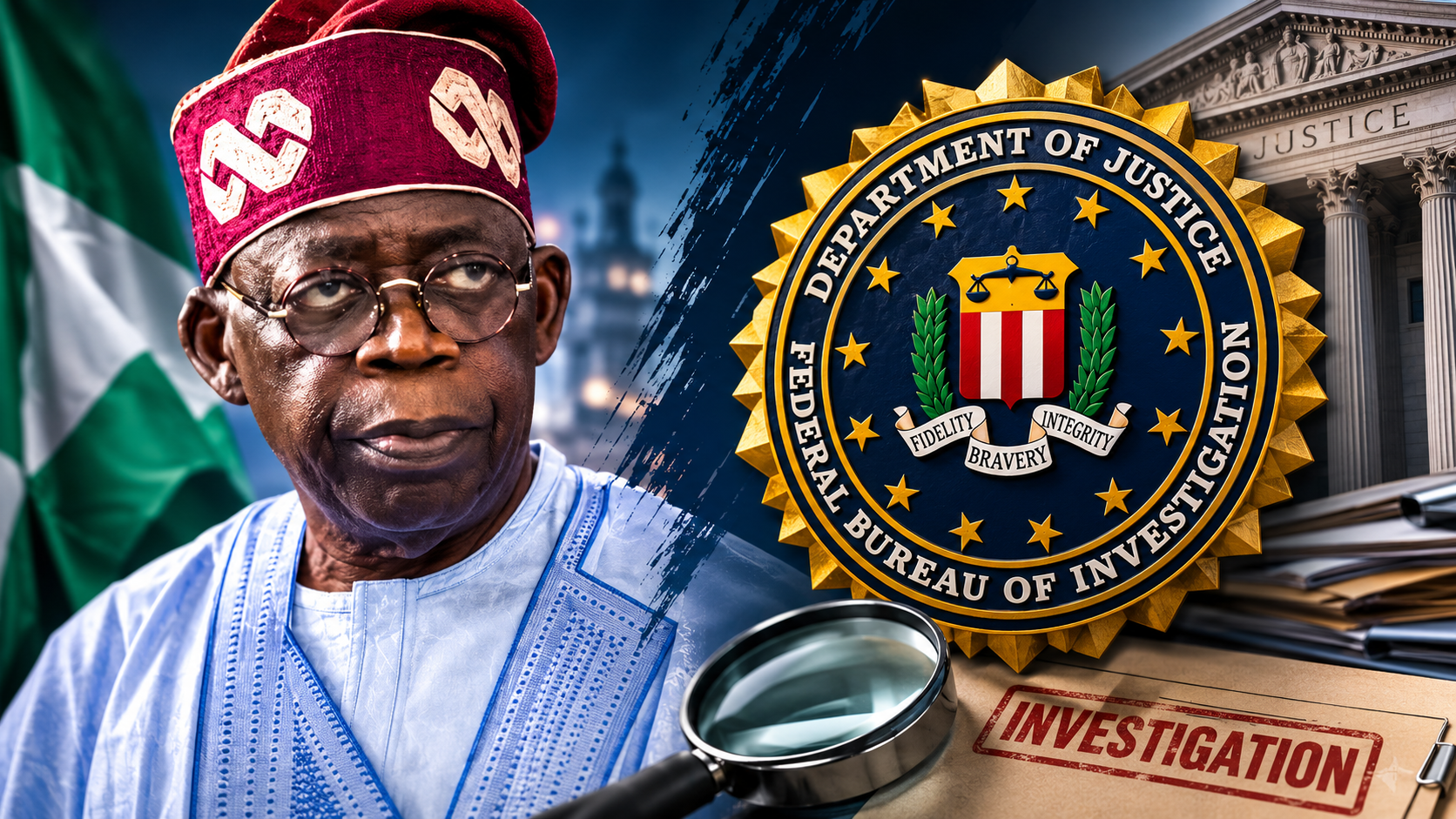
A legal filing thousands of miles from Abuja could become one of the loudest sounds in Nigeria’s 2027 campaign season.
Reports that President Bola Ahmed Tinubu has moved in a U.S. court to block the release of records linked to old drug-trafficking allegations have reopened a familiar but politically combustible question: can an overseas paper trail reshape a domestic election narrative?
For Tinubu, the issue is not new. His opponents have long pointed to a 1990s U.S. civil forfeiture matter as part of a broader argument about character, transparency and fitness for office. His allies have consistently dismissed the attacks as recycled smears, stressing that no criminal conviction was recorded against him. But the politics of the latest court fight may be more dangerous than the legal substance. In campaigns, perception often moves faster than pleadings, and a headline about blocking records can be as potent as the records themselves.
Why the U.S. filing matters now
The timing is what gives the story force.
Nigeria is not yet in the formal 2027 campaign season, but the pre-campaign has already begun. Parties are testing messages, coalitions are whispering, regional blocs are recalculating, and economic hardship has sharpened public appetite for accountability. In that environment, any story that fits into a larger narrative of secrecy, privilege or unresolved questions can travel quickly.
A U.S. court dispute over access to records also has a special political quality: it is difficult for local power structures to control. Nigerian political controversies are often fought through press statements, party loyalists and carefully managed briefings. American court filings, by contrast, can become public documents, quoted line by line and shared across platforms without the filter of official spokespeople.
That is why the reported move to prevent disclosure may matter even before any judge rules. If the case concerns Freedom of Information Act requests, the legal question may involve privacy, exemptions, law-enforcement files or whether agencies must disclose particular documents. But opposition messaging will be simpler: if there is nothing to hide, why fight release?
That slogan is not a legal argument. It is, however, a campaign argument.

BYBIT.COM
Bybit — Trade crypto with up to $30,000 in welcome bonuses
Buy, sell and trade BTC, ETH and 1,000+ altcoins. Spot, futures and earn products on one of the world's fastest crypto exchanges.
Ad. Crypto trading involves risk. Terms apply — see the promotion page for details.
The old allegation with new political life
The controversy traces back to U.S. proceedings in the early 1990s involving funds linked by American investigators to suspected narcotics activity. Tinubu has not been convicted of drug trafficking in the United States, and his defenders routinely emphasize that distinction. The case most often cited in Nigerian politics involved civil forfeiture, a legal process in which the government can pursue assets rather than a criminal conviction against a person.
That nuance matters in law. It matters less in electoral combat.
In 2023, Tinubu’s opponents tried to turn foreign records into a campaign and post-election weapon, most notably through the fight over his Chicago State University records. The courts did not remove him from office. Nigeria’s Supreme Court ultimately affirmed his election victory. But the episode showed something important: foreign documents can dominate Nigerian political conversation for weeks, forcing the presidency to respond to questions it would rather leave behind.
The same pattern could repeat ahead of 2027. A document does not need to prove the opposition’s harshest claim to be politically useful. It only needs to keep the question alive.
Concrete examples are easy to imagine. A single redacted FBI page could become a billboard. A court transcript could become a campaign jingle. A judge’s procedural order could be turned into a viral thread. A refusal to release records could be framed as confirmation, even if the legal basis is routine privacy protection. This is the danger for Tinubu’s camp: in a fragmented media environment, legal complexity rarely wins the first round.
Opposition parties will see an opening
For opposition figures, the story offers a ready-made bridge between character politics and economic anger.
Tinubu’s administration has asked Nigerians to endure painful reforms: fuel subsidy removal, currency devaluation pressures, higher transport costs and stubborn inflation. The government argues that these measures are necessary to repair a distorted economy. Many citizens, however, judge policy through lived hardship. When people are paying more for food, fuel and school fees, old questions about elite accountability become newly relevant.
An overseas legal fight allows opponents to say: ordinary Nigerians are being asked to sacrifice while the president is using lawyers abroad to keep his past sealed. That line may be unfairly simplified, but it is politically sharp.

TEMU.COM
Teclast P30T Android 16 Tablet — 10.1" TDDI Display, Unisoc T610 Octa-Core, 12GB RAM (3GB+9GB Virtual), 128GB ROM, 6000mAh
🔥 Flash grab price: ₦999 — high-priced item for next to nothing. Limited quantities, first come, first served.
Ad. Eligible new app users in Nigeria only. Shipping or other charges may apply. See the T&Cs on the promotion page.
The People’s Democratic Party, Labour Party factions and emerging coalition actors could each use the matter differently. The PDP may frame it as evidence that the ruling party never answered fundamental questions from 2023. Labour-aligned voices may present it as proof that Nigeria needs a cleaner break from old political structures. Northern political actors weighing 2027 alliances may use it more quietly, as leverage in negotiations over tickets, endorsements and regional concessions.
The presidency’s challenge will be to avoid letting the opposition define the story first.
Tinubu’s best defence is clarity, not silence
The instinct of any government facing reputational risk is to narrow the issue: say it is before a court, accuse critics of bad faith, and move on. That may not be enough here.
Tinubu’s team needs a communications strategy that separates legal rights from political optics. A person can lawfully oppose disclosure of certain records and still owe citizens a clear explanation of why. If the argument is privacy, say so. If it is about inaccurate or law-enforcement-sensitive material, explain that. If the records are being mischaracterized, provide a timeline and supporting documents.
Silence creates a vacuum, and Nigerian politics abhors a vacuum.
The presidency also has to avoid overreacting. Attacking journalists, activists or foreign requesters would likely extend the life of the story. So would contradictory statements from aides. A disciplined response would acknowledge the existence of old allegations, restate the absence of a criminal conviction, clarify the legal basis of the U.S. filing, and pivot back to governance with measurable results.
But governance alone may not bury the issue. In modern campaigns, character controversies do not disappear because roads are commissioned or investment pledges are announced. They fade only when the public either receives a convincing answer or finds a more urgent story.
A 2027 flashpoint in the making
The legal outcome may take time, but the political effects could arrive immediately. If records are released, opponents will mine them aggressively. If records are withheld, they will argue that the cover-up is the story. If the case drags, it becomes a recurring campaign prop.

JUMIA.COM.NG
Jumia — Shop phones, electronics, fashion and more at up to 70% off
Nigeria's largest online marketplace. Daily deals, free delivery on selected items and pay on delivery.
Ad. Offers and pricing subject to availability on Jumia.
That is why this U.S. court fight should not be treated as a distant legal technicality. It sits at the intersection of three powerful forces: Nigeria’s unresolved 2023 legitimacy battles, public frustration over economic pain, and the approaching scramble for 2027.
Tinubu has survived bruising political storms before. He built a reputation as a strategist who understands timing, alliances and narrative. But this controversy is different because the battlefield is partly outside his control. The next major document, filing or order may not come from Abuja. It may come from an American docket.
Conclusion
The reported U.S. court move does not by itself prove the allegations Tinubu’s critics are reviving. Courts decide law, not campaign slogans. But politics often turns on what voters believe leaders are willing to disclose.
Ahead of 2027, the question may not simply be what is in the records. It may be why Nigerians are still being asked to wonder.
Sources
- ARISE News — Tinubu files in U.S. court to block release of records on alleged drug trafficking
- BBC News — Bola Tinubu diploma: No evidence Nigeria's president forged college record
- Reuters — Nigeria's Supreme Court upholds Tinubu's presidential election win
- U.S. Department of Justice — Freedom of Information Act, 5 U.S.C. § 552
- PACER — Public Access to Court Electronic Records