Shettima in Angola: Nigeria’s Peacekeeping Test
VP Kashim Shettima’s AU peace summit trip tests Nigeria’s bid to regain influence in African security diplomacy.
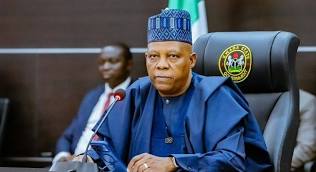
Vice President Kashim Shettima’s trip to Angola is more than a routine diplomatic substitution. By representing President Bola Tinubu at an African Union peace summit in Luanda, Shettima is stepping into one of the hardest rooms in African politics: a room shaped by coups, insurgencies, contested sanctions, fragile alliances and a growing suspicion of regional power brokers.
For Nigeria, the question is no longer whether it is Africa’s natural security leader. That assumption has weakened. The real question is whether Abuja can persuade its neighbours that Nigerian leadership still serves a collective purpose.
That is the test in Angola. Nigeria wants to reclaim its peacekeeping voice, but the continent it once helped police has changed.
Nigeria’s old authority is no longer automatic
Nigeria’s claim to African security leadership was built over decades. Its military and diplomatic weight helped define the Economic Community of West African States Monitoring Group, better known as ECOMOG, during the civil wars in Liberia and Sierra Leone. Nigerian troops, money and political risk were central to those interventions. Abuja also became a major contributor to United Nations peacekeeping operations, with Nigerian soldiers and police serving from Lebanon to the Democratic Republic of Congo, Sudan and Mali.
That record created a powerful image: Nigeria as the country willing to absorb the cost of regional stability.
But old capital depreciates. Today, Nigeria is struggling with armed banditry, jihadist violence in the North East, farmer-herder conflict, kidnapping networks and economic strain at home. Its military remains active across several theatres inside the country. That makes any claim to external leadership more complicated. Neighbours can fairly ask: can Nigeria help stabilise Africa while still battling deep insecurity within its own borders?
The answer Abuja wants to project in Angola is yes — but not through swagger. The age of unquestioned Nigerian primacy is over. The new task is coalition-building.

BYBIT.COM
Bybit — Trade crypto with up to $30,000 in welcome bonuses
Buy, sell and trade BTC, ETH and 1,000+ altcoins. Spot, futures and earn products on one of the world's fastest crypto exchanges.
Ad. Crypto trading involves risk. Terms apply — see the promotion page for details.
Coups have changed the diplomatic terrain
The immediate backdrop is West Africa’s democratic recession. Military takeovers in Mali, Guinea, Burkina Faso and Niger have shaken the regional order. The juntas in Mali, Burkina Faso and Niger have also moved closer to one another through the Alliance of Sahel States, while distancing themselves from ECOWAS. Their decision to leave ECOWAS was a direct challenge to the bloc’s authority and, by extension, to Nigeria’s influence under Tinubu’s chairmanship.
The Niger coup was especially damaging for Abuja. Nigeria shares a long border, deep trade ties and cultural links with Niger. ECOWAS sanctions and the threat of possible military intervention generated anger in Niamey and unease among many Nigerians, particularly in northern states with close cross-border relationships. The episode fed a perception that Nigeria was leaning too heavily on coercion and not enough on patient diplomacy.
That mistrust now hangs over every regional security conversation.
In Angola, Shettima’s message will have to be carefully calibrated. Nigeria cannot appear to excuse military rule; doing so would undermine the African Union’s anti-coup norms. But Abuja also cannot pretend that isolating juntas has restored constitutional order. In parts of the Sahel, sanctions and diplomatic freezes have created openings for rival external partners and hardened anti-ECOWAS sentiment.
Nigeria’s challenge is to defend democracy without sounding like a scolding hegemon.
What Abuja wants from African security diplomacy
Nigeria’s immediate interest is practical: reduce the pressure of insecurity around its borders. Instability in the Sahel does not stay in the Sahel. Weapons, fighters, criminal networks and displaced communities move across porous frontiers. Boko Haram and Islamic State West Africa Province have already shown how insurgencies exploit weak border governance around the Lake Chad Basin.
That is why Nigeria has long supported the Multinational Joint Task Force, which brings together countries affected by the Boko Haram crisis. But the force, like many African security mechanisms, depends on political trust, funding, intelligence-sharing and sustained operational coordination. If regional relationships deteriorate, the security architecture suffers.

TEMU.COM
Teclast P30T Android 16 Tablet — 10.1" TDDI Display, Unisoc T610 Octa-Core, 12GB RAM (3GB+9GB Virtual), 128GB ROM, 6000mAh
🔥 Flash grab price: ₦999 — high-priced item for next to nothing. Limited quantities, first come, first served.
Ad. Eligible new app users in Nigeria only. Shipping or other charges may apply. See the T&Cs on the promotion page.
At the AU summit, Nigeria will likely push three linked priorities.
First, it wants more credible African-led security financing. African leaders have repeatedly argued that the continent cannot keep outsourcing crisis response to donors whose priorities shift. The AU’s peace and security structures exist, but implementation is often underfunded. Nigeria wants stronger continental mechanisms that can support missions before conflicts metastasise.
Second, Abuja wants to reconnect counterterrorism with development. Military operations may clear territory, but they do not rebuild livelihoods, schools, local courts or trust in government. In the North East, Nigeria has learned that battlefield gains can be reversed if communities remain economically abandoned or politically alienated. That lesson applies across the Sahel.
Third, Nigeria wants to preserve regional institutions. ECOWAS is wounded, but it remains one of Africa’s most important blocs. If it fractures further, West Africa could become a patchwork of rival security camps. That would make coordinated responses to terrorism, trafficking, migration shocks and maritime insecurity much harder.
Angola is a symbolic venue
Angola is not a neutral stage in the emotional sense. It is a country with its own long memory of war, external intervention and post-conflict state-building. Luanda’s role in hosting peace diplomacy gives the summit a symbolic weight: African states are not only debating crises; they are debating who has the legitimacy to resolve them.
For Nigeria, symbolism matters. Abuja wants to be seen again as a serious convener, not merely a large country reacting to events. Shettima’s presence is part of that image repair. He brings the authority of the presidency, but also a northern Nigerian political profile relevant to Sahel-facing diplomacy. His region understands the human consequences of insecurity, trade disruption and border tension.
Still, representation is not strategy. A summit speech cannot rebuild trust with Niger. It cannot reverse coups. It cannot by itself restore Nigeria’s peacekeeping capacity or repair ECOWAS cohesion. The value of the Angola trip will depend on what follows: quiet diplomacy, security coordination, humanitarian engagement and a willingness to listen as much as lead.

JUMIA.COM.NG
Jumia — Shop phones, electronics, fashion and more at up to 70% off
Nigeria's largest online marketplace. Daily deals, free delivery on selected items and pay on delivery.
Ad. Offers and pricing subject to availability on Jumia.
The credibility gap Nigeria must close
Nigeria’s biggest obstacle is credibility. African security diplomacy is crowded now. Middle powers, Gulf states, Russia, China, the European Union and the United States all shape the choices available to African governments. Juntas can shop for partners. Civilian governments can hedge. Regional bodies can be bypassed.
If Nigeria wants to regain influence, it must offer something more durable than status. That means improving its own governance at home, protecting civilians during security operations, sustaining defence reforms, and speaking consistently on constitutional order. It also means avoiding the temptation to treat dissenting neighbours as disobedient juniors.
The old Nigerian peacekeeping story was built on sacrifice. The new one must be built on trust.
Conclusion: leadership must be earned again
Shettima’s Angola trip comes at a moment when Nigeria needs African security diplomacy as much as African security diplomacy needs Nigeria. The country remains too large, too strategically placed and too historically invested to be irrelevant. But relevance is not the same as leadership.
If Abuja wants to reclaim its peacekeeping voice, it must show that Nigerian leadership can be firm without being overbearing, democratic without being performative, and security-minded without ignoring the grievances that fuel conflict. Angola is a platform. The harder work begins after the summit.