Kogi APC Chairman’s Death Jolts 2027 Peace Talks
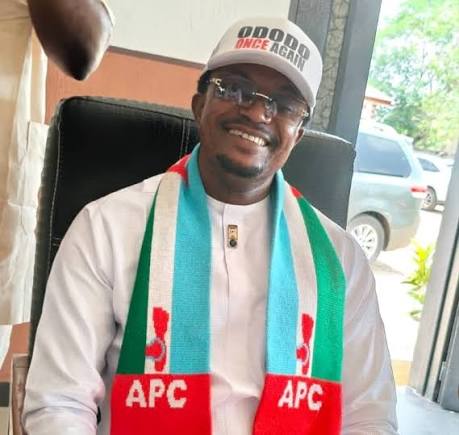
A reconciliation meeting is supposed to lower the temperature. In Kogi, it reportedly became the scene of a political tragedy.
The reported death of the Kogi State chairman of the All Progressives Congress, APC, after he slumped during a reconciliation meeting has sent a shock far beyond one party secretariat. It is, first, a human loss: a family, a state chapter, and colleagues forced to confront sudden grief. But it is also a stark political signal. Nigeria’s ruling party is entering the long 2027 season with its internal peace talks carrying heavier stakes, sharper rivalries, and more pressure than the public often sees.
Channels Television and The Guardian reported the incident as a live-news development: the Kogi APC chairman slumped during a reconciliation engagement and died. That single line carries more weight than a routine political brief. It lands in a season when “reconciliation” has become a survival tool for parties trying to hold together ambitious governors, former governors, lawmakers, defectors, local power brokers, and candidates-in-waiting.
What Happened in Kogi
The details publicly reported so far are spare, but the setting matters. The incident occurred during a reconciliation meeting, the kind of gathering parties convene when grievances are no longer private and factional tension risks becoming electoral damage.
In Kogi, APC politics has been unusually consequential. The party retained the governorship in 2023 after Usman Ododo was declared winner by INEC, defeating the SDP’s Murtala Ajaka and the PDP’s Dino Melaye. That election was not merely another off-cycle state poll; it became a test of the APC’s post-Buhari, Tinubu-era ability to defend a North-Central stronghold amid opposition anger, local realignments, and intense scrutiny of state-level political machinery.
Reconciliation after such contests is not ceremonial. It is the party’s attempt to manage those who felt shortchanged in primaries, overlooked in appointments, used during campaigns, or exposed after victory. In state politics, many grudges are practical: who controls ward structures, who gets commissioner slots, who influences contracts, who nominates local government candidates, who has access to the governor, and who is being prepared for the next ticket.
That is the furnace in which peace meetings now happen.
Why a State Party Office Can Shake National Politics
To casual observers, a state chairman may look like a local official. In Nigeria’s party system, that is a mistake. State party chairmen are often the gatekeepers of structure. They sit between governors and grassroots blocs, between national headquarters and ward executives, between campaign promises and political rewards.
They know which faction can mobilise a local government, which aggrieved aspirant can quietly sabotage turnout, and which “small” ward dispute can become a court case. They also understand the emotional economy of party politics: loyalty, betrayal, compensation, humiliation, and recognition.
That is why the reported death of a chairman in the middle of reconciliation is more than a sad footnote. It interrupts a process that likely required delicate handling. It creates an immediate vacuum at a sensitive time. It may force the national and state leadership to decide whether to pause, accelerate, or reframe the reconciliation effort.
The APC’s national advantage has always rested not only on presidential incumbency but on a broad, sometimes uneasy federation of state machines. Kogi is one of those machines. If it becomes unsettled, the consequences may not remain within Lokoja.
Reconciliation Is Becoming a High-Pressure Job
Across Nigeria, party reconciliation has become a euphemism for crisis management.
In Edo, major parties have repeatedly had to manage fallout from governorship primaries and factional claims. In Ondo, APC aspirants and allies battled over primary processes and power-sharing before and after the governorship race. In Rivers, the broader political environment has shown how quickly elite disputes can paralyse institutions and split loyalties across party lines. Even where the APC is dominant, dominance does not erase tension; it often multiplies competition inside the same tent.
The reason is simple: Nigeria’s parties are not just ideological platforms. They are vehicles for access. Once a party controls government, internal competition can become fiercer than the general election. The real contest may shift from party versus party to bloc versus bloc inside the ruling structure.
Reconciliation meetings, therefore, are no longer soft-touch courtesy visits with group photographs. They are arenas where careers are rescued or buried, where 2027 alignments begin, and where local leaders test how much leverage they still have.
That pressure is not abstract. It is carried by human beings: chairmen, secretaries, governors, lawmakers, elders, youth leaders, women leaders, and ward organisers who absorb anger from above and below. The Kogi tragedy is a reminder that political stress is not only institutional. It is physical, emotional, and deeply personal.
The 2027 Calculation Has Already Started
No party will publicly admit that 2027 is driving every internal conversation. But everyone in Nigerian politics knows the calendar begins early.
For President Bola Tinubu and the APC, the road to a second-term bid will depend on keeping the ruling coalition intact while managing economic dissatisfaction, opposition regrouping, and state-level ambitions. The 2023 presidential election showed that incumbency alone does not guarantee political comfort. Tinubu won, but the contest exposed regional volatility and the capacity of opposition forces to exploit discontent.
That makes states like Kogi important. The North-Central zone is not politically ornamental; it is a battleground of margins, alliances, and symbolic balance. A divided APC chapter in a strategic state can create openings for opposition parties, especially where local grievances overlap with national hardship.
This is why reconciliation is being taken seriously. The APC cannot afford a chain of state chapters entering 2027 with unresolved bitterness from 2023 governorship races, legislative primaries, ministerial nominations, or local government contests. The opposition does not need to defeat a united APC everywhere. It only needs fractures wide enough to convert anger into abstention, protest votes, or defections.
Conclusion: A Death No Strategist Can Spin
The first response to the Kogi incident should be humane: condolences, respect, and restraint. A man reportedly died while doing political work in a tense environment. That should not be reduced to factional gossip.
But politics will still move, as it always does. The APC must now handle both grief and strategy. It must replace leadership without deepening division. It must continue reconciliation without making it look like business as usual. And it must confront a harder truth: the path to 2027 is already producing pressure points inside the ruling party.
Kogi has turned one reconciliation meeting into a national warning. Peace talks are no longer routine. They are becoming the front line of Nigeria’s next political war.