Dangote’s $50bn IPO Bet and Nigeria’s Fuel Future
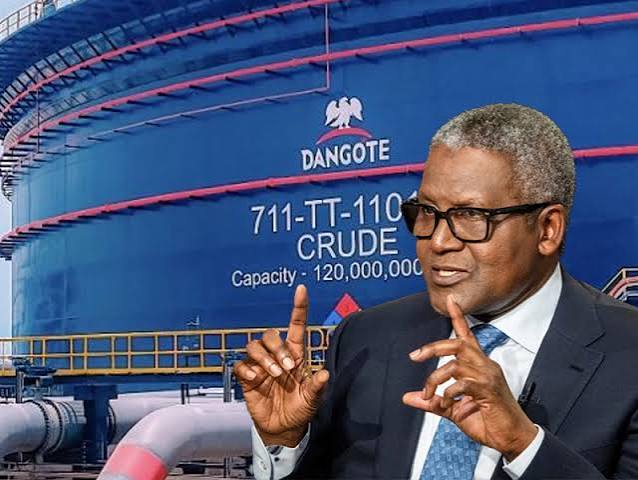
A $50 billion public listing for Dangote Refinery would not be just another big-ticket IPO. In Nigeria, where petrol prices can move inflation, elections and exchange-rate sentiment, it would be a market event with national consequences.
A live report says Dangote Refinery is set for a Monday IPO targeting a $50 billion valuation. If that timetable holds, Africa’s largest refinery would move from being a privately controlled industrial bet into a publicly traded fuel-market heavyweight—one whose margins, debts, supply contracts and political bargains would be watched by investors as closely as by motorists.
That matters because Nigeria’s fuel market is no longer protected by the old subsidy playbook. Since the removal of petrol subsidies and the naira’s sharp devaluations, pump prices have become more exposed to crude costs, exchange rates, logistics and regulatory decisions. Dangote’s listing could therefore become a test of a larger question: can public ownership make Nigeria’s fuel system more transparent and resilient, or will it simply put a market valuation on an already powerful private monopoly?
Why a $50bn Refinery Listing Would Be Different
Dangote Refinery is not a conventional industrial asset. The 650,000-barrel-per-day plant was built to solve a structural contradiction: Nigeria is Africa’s largest crude oil producer but has long depended heavily on imported refined fuel. Reuters reported the refinery began producing fuel products in January 2024, and later started processing petrol—milestones that turned a long-running construction project into a real market force.
A $50 billion valuation would immediately place the company in a different category from most Nigerian listed equities. Even a partial float could deepen the Nigerian Exchange, attract pension fund allocations, draw foreign portfolio attention and create a new benchmark for infrastructure-heavy African listings.
But the IPO’s deeper significance would be disclosure. A public refinery must tell the market more than a private one does. Investors would want to know: How much crude is supplied locally? How much is imported? Are purchases settled in dollars or naira? What are the refinery’s debt-service obligations? How much petrol is sold domestically versus exported? What margins does it earn when pump prices rise?
Those questions are not academic. They are the same questions consumers and policymakers have struggled to answer in a fuel market historically dominated by opaque subsidy claims, import allocations and foreign-exchange bottlenecks. Public ownership would not eliminate opacity by itself, but quarterly reporting and exchange scrutiny could make it harder to hide the economics of petrol.

BYBIT.COM
Bybit — Trade crypto with up to $30,000 in welcome bonuses
Buy, sell and trade BTC, ETH and 1,000+ altcoins. Spot, futures and earn products on one of the world's fastest crypto exchanges.
Ad. Crypto trading involves risk. Terms apply — see the promotion page for details.
Petrol Pricing: Transparency, Not Cheap Fuel
The most immediate public expectation will be lower petrol prices. That expectation should be handled carefully.
Domestic refining can reduce costs that come with importing finished petrol: freight, insurance, port charges, shipping delays and some working-capital strain. If a cargo of petrol no longer has to be sourced from Europe or elsewhere, Nigeria can save on logistics and reduce exposure to international supply disruptions.
But a listed Dangote Refinery would not be a charity. Public shareholders would expect returns. If the refinery can sell petrol at import-parity prices—or export products at attractive regional margins—it has a commercial incentive to do so. A public listing may actually make discounted political pricing harder, because minority shareholders can challenge arrangements that sacrifice profits for government convenience.
That is where the politics becomes delicate. Nigeria’s government wants stable pump prices because petrol is politically explosive. Labour unions want affordability. Marketers want predictable margins. Consumers want relief. Investors want profitability. A listed refinery would sit at the centre of all four demands.
The best-case outcome is not artificially cheap petrol. It is a cleaner price formation system. For example, if crude is supplied locally in naira and the refinery sells petrol domestically, regulators and investors should be able to see how much of the pump price reflects crude, refining costs, taxes, transport, marketer margins and FX exposure. That transparency could reduce suspicion and make price debates more evidence-based.
The worst-case outcome is a private pricing bottleneck dressed up as capital-market reform: one dominant refinery, limited import competition, unclear supply contracts and pump prices that remain high without credible explanation.
The Naira Question: Relief or Round Trip?
Nigeria’s fuel imports have historically been a major source of dollar demand. Every petrol cargo required foreign exchange. When the naira weakened, import costs rose, and those costs either showed up at the pump or re-emerged as fiscal pressure through subsidies and arrears.

TEMU.COM
Teclast P30T Android 16 Tablet — 10.1" TDDI Display, Unisoc T610 Octa-Core, 12GB RAM (3GB+9GB Virtual), 128GB ROM, 6000mAh
🔥 Flash grab price: ₦999 — high-priced item for next to nothing. Limited quantities, first come, first served.
Ad. Eligible new app users in Nigeria only. Shipping or other charges may apply. See the T&Cs on the promotion page.
In theory, domestic refining helps the naira. If Nigeria uses local crude, refines locally and distributes locally, fewer dollars are needed to import finished petrol. That could ease pressure on the foreign-exchange market, reduce volatility and improve reserves management.
In practice, the benefit depends on settlement terms. If Dangote buys crude in dollars, services large foreign debts in dollars and repatriates dividends to foreign investors after the IPO, the naira relief may be smaller than advertised. The transaction can become a round trip: fewer dollars spent on petrol imports, but more dollars needed for crude payments, financing costs and shareholder returns.
This is why the naira-for-crude arrangement matters. If domestic crude supply to local refineries is settled in naira under transparent rules, Nigeria can reduce the direct FX burden of petrol supply. If the refinery also exports diesel, jet fuel or petrol into West Africa, it can earn foreign exchange that strengthens its own balance sheet and potentially supports the broader market.
A successful IPO could also bring short-term FX inflows if foreign investors participate. But portfolio inflows are not the same as structural relief. They can leave quickly if policy credibility weakens, dividends disappoint or the naira comes under renewed pressure. The durable gain comes only if local refining permanently cuts Nigeria’s dependence on imported fuel.
Domestic Refining Politics Will Get Louder
Dangote’s listing would also intensify the politics of market power. Nigeria has wanted private refining for decades, but getting it in the form of one dominant player creates new regulatory questions.
Independent marketers may worry about access to supply and pricing power. Smaller modular refineries may argue that incentives and crude allocation should not favour the largest operator alone. NNPC will remain central because of its crude supply role and its influence across the downstream system. Regulators will have to prove that domestic refining does not become domestic gatekeeping.
Public ownership can broaden participation, especially if Nigerian institutional and retail investors get meaningful access to the IPO. Pension funds, mutual funds and individual investors could become indirect owners of the country’s most important downstream asset. That would be politically useful: a refinery owned partly by the public is easier to defend than one seen purely as a billionaire’s strategic choke point.

JUMIA.COM.NG
Jumia — Shop phones, electronics, fashion and more at up to 70% off
Nigeria's largest online marketplace. Daily deals, free delivery on selected items and pay on delivery.
Ad. Offers and pricing subject to availability on Jumia.
Still, ownership is not control. If the free float is small and founder control remains overwhelming, governance reforms may be limited. Investors will need strong board independence, related-party transaction disclosures, audited supply agreements and clear dividend policy. Without those protections, the IPO risks giving the market exposure without giving it influence.
Conclusion: A Listing Can Help, But It Cannot Do the State’s Job
Dangote Refinery’s reported $50 billion IPO could be a turning point for Nigeria’s fuel market. It could deepen the capital market, expose the economics of petrol supply, reduce import dependence and ease some pressure on the naira.
But an IPO is not a magic wand. Petrol will not become cheap simply because refinery shares trade publicly. The naira will not stabilise unless local refining genuinely reduces dollar demand. And domestic refining politics will not disappear unless regulators prevent market power from hardening into monopoly power.
The real gamble is bigger than valuation. Nigeria is about to find out whether its most important private industrial asset can become a transparent public-market institution—and whether that shift can finally make the country’s fuel market less fragile, less opaque and less vulnerable to the next currency shock.