Burna Boy and Afrobeats’ Endless Global Summer
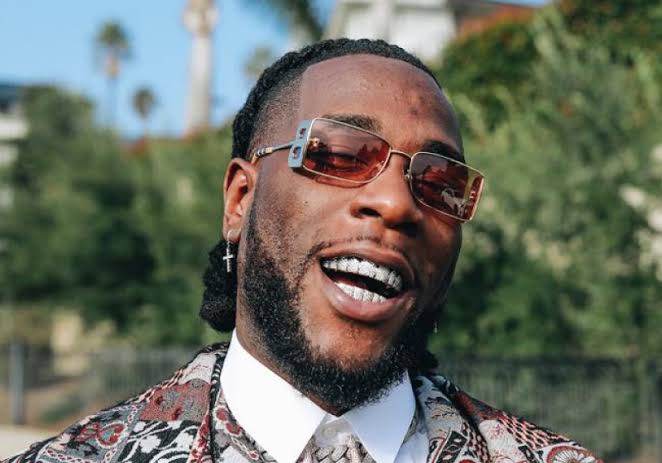
When Burna Boy turns up on a Billboard global summer list beside Ariana Grande and Shakira, it is more than a neat trivia point. It is a snapshot of where popular music now lives: everywhere at once, moving through Lagos, Miami, Bogotá, London, New York and TikTok before radio programmers have finished deciding what “fits.”
A decade ago, an Afrobeats record breaking into the same seasonal conversation as American pop and Latin superstars still felt like a special occasion. Today, it feels like a trend line. Burna Boy’s presence alongside Grande and Shakira signals that Afrobeats is no longer being treated as a guest in the global pop house. It is part of the architecture.
A Summer List That Says More Than a Season
Billboard’s summer music ecosystem matters because summer songs are not just measured by peak chart positions. They are measured by persistence: how often a track follows listeners from cars to clubs, beaches to cookouts, gym playlists to late-night videos. A true summer song does not merely debut; it lingers.
That is why Burna Boy’s inclusion in a global summer conversation is important. Ariana Grande arrives with the machinery of modern U.S. pop: spotless vocals, massive streaming support, high-impact visuals and a fan base trained to mobilize instantly. Shakira brings decades of cross-border fluency, moving comfortably between English and Spanish-language pop while remaining a stadium-sized cultural force.
Burna Boy’s lane is different, but it is now just as international. His records travel through rhythm first: warm bass, conversational melodies, percussion that can feel intimate in headphones and explosive at festivals. Whether the song is the melancholy uplift of “Last Last,” the chest-out swagger of “City Boys,” or the polished confidence of “Sittin’ on Top of the World,” Burna has built a catalog designed for repeat listening across regions.
The point is not that he sounds like Grande or Shakira. The point is that he no longer has to. His placement beside them suggests global pop has widened enough to let different centers of gravity coexist.
Burna Boy’s Route Was Built on Consistency
Burna Boy’s mainstream moment did not arrive from one lucky viral break. It came through years of compounding visibility.
“Ye” became an early international calling card because it sounded both rooted and borderless. “On the Low” turned into a diaspora anthem without needing to chase an American radio template. “Anybody” sharpened his festival appeal. Then “Last Last” became the kind of post-breakup anthem that transcended language, geography and genre because everyone understood the feeling before they parsed every lyric.
That run matters. Global charts reward momentum as much as discovery. A new listener may first encounter Burna through a summer list or a playlist placement, but the back catalog is what keeps the conversion going. Once a casual listener lands on one song, the streaming trail leads backward and outward: African Giant, Twice As Tall, Love, Damini, I Told Them...
This is the modern Afrobeats advantage. The music does not depend on a single gateway anymore. There are multiple entry points: Burna Boy, Wizkid, Davido, Rema, Tems, Asake, Ayra Starr, Fireboy DML, Omah Lay and more. Each artist offers a different texture, from spiritual pop to street-hop bounce to R&B-inflected minimalism. Burna’s gift is that he sits at the intersection of several of those lanes while carrying the force of a classic album artist.
Afrobeats Is Now a Chart System, Not a Surprise
The wider industry has already adjusted. Billboard and Afro Nation launched the U.S. Afrobeats Songs chart in 2022, a formal recognition that the music’s audience in America had become too large to treat as scattered playlist activity. The Billboard Global 200 and Global Excl. U.S. charts also changed the conversation by making worldwide streams and sales central to how global reach is measured.
That framework helps explain why Afrobeats keeps surfacing in spaces once dominated by U.S. and U.K. pop. The genre is strong in Nigeria and Ghana, but its chart footprint is amplified by diaspora communities in London, Toronto, Atlanta, Houston, New York and Johannesburg. It is also boosted by listeners with no direct cultural tie to West Africa who simply recognize the records as pop music built for movement.
Concrete examples are everywhere. Wizkid and Tems’ “Essence” became a slow-burning global hit and helped establish Afrobeats as a premium sound in U.S. R&B and pop circles. Rema and Selena Gomez’s “Calm Down” proved that an Afrobeats-rooted record could become one of the biggest crossover singles in the world. Tems has moved from standout vocalist to Grammy-winning writer and global festival staple. Ayra Starr has become a Gen Z-facing ambassador for the sound, blending Afropop, fashion and social media fluency.
Burna Boy’s summer placement sits within that larger movement. It is not an isolated win; it is another marker in a years-long normalization.
Why the Ariana and Shakira Comparison Matters
Pairing Burna Boy in the same headline space as Ariana Grande and Shakira is symbolically powerful because those artists represent two established models of global pop dominance.
Grande represents the streaming-era American superstar: high-volume fandom, instantly recognizable vocal identity and the ability to turn album cycles into online events. Shakira represents the long game of international crossover: a multilingual catalog, dance-driven performance, Latin pop’s global ascent and an audience spanning generations.
Burna Boy represents a third model: the African superstar whose music did not need to be stripped of its local DNA to scale globally. He did not become bigger by sounding less Nigerian. If anything, his rise proved the opposite. The specificity is the export.
That distinction matters because earlier eras of crossover often demanded compromise. Non-Western artists were expected to smooth out accents, change production styles, chase English hooks or seek validation through Western co-signs. Today, collaborations still help, but the balance of power has shifted. A Burna Boy record can travel because listeners are meeting it on its own terms.
The Mainstream Moment Keeps Stretching
Afrobeats’ global rise is sometimes described as a “moment,” but the word now feels too small. Moments fade. What is happening looks more like infrastructure: charts, festivals, label divisions, touring circuits, brand partnerships, radio formats, editorial playlists and fan communities all reinforcing one another.
The strongest proof is that the music is no longer restricted to one type of success. It can produce club records, heartbreak records, luxury rap hybrids, spiritual ballads and global collaborations. It can live at Afro Nation, Coachella, London’s O2 Arena, Madison Square Garden and a family party playlist. It can be the center of the room or the soundtrack in the background.
Burna Boy’s latest Billboard summer recognition is valuable because it shows durability. Afrobeats is not just arriving; it is staying through multiple seasons, multiple artists and multiple market cycles.
Conclusion: Afrobeats Is No Longer Asking for Space
Burna Boy standing beside Ariana Grande and Shakira on a global summer list is not a novelty. It is a sign of pop music catching up to reality.
The audience has already expanded. The charts are reflecting it. The industry is building around it. And artists like Burna Boy are proving that Afrobeats does not need to chase the mainstream to belong there. The mainstream has stretched wide enough to include the sound of Lagos at full volume.